Showing posts with label Kabompo. Show all posts

Wednesday, 29 December 2021

Tadalisika Zulu: An Ambitious Young Zambian Engineer

By Paul Shalala

Tadalisika Zulu with Minister of Infrastracture Charles Milupi
when he toured the KK International Airport project site

She was born on the 12th of October 1998 in Lusaka

Tadalisika Zulu is a third born child in a family of four.

Growing up, mathematics was her favourite subject and she says she enjoyed doing calculations.

Her performance in class made her attempt what was not imagined at the time.

“At the age of 10, I attempted the Grade 7 exams as a 5th Grader in 2008. I passed the exams and I went to St. Mary’s Secondary School in Lusaka for Grade eight. I later went to St. Monica’s Secondary School in Chipata for my Senior Secondary,” she said in an interview.

Tadalisika completed Grade 12 at the age of 15, three years ahead of what mostly consider the normal age for a Sugo in Zambia.

“I turned 15 years a week after I started writing the Grade 12 examinations. My love for mathematics increased throughout high school and it became my best subject. I was so confident in my skills that I was looking forward to writing the math exam because I knew it would be an automatic distinction.”

As expected Tadalisika, got a distinction in mathematics.

While awaiting her Grade 12 results, Tadalisika was in deep thoughts, trying to gather her thoughts on which course to pursue.

Her best two courses were Aeronautics or Civil Engineering because they both involve mathematics and creativity.

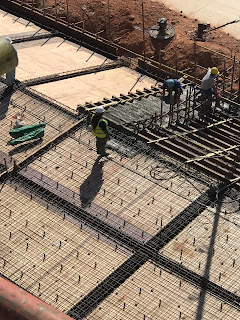
Tadalisika supervising some workers

During her gap year, she lived with her family in Kabompo District of North Western Province.

While in Kabompo, Tadalisika noticed the lack of proper infrastructure and this made her resolve to pursue engineering even stronger.

In 2015, she enrolled at Wuhan University of Technology and four years later, she graduated with a Bachelor of Engineering in Civil Engineering.

“I returned to Zambia and began my internship at the Department of Public Infrastructure under the Ministry of Housing and Infrastructure Development. As an intern, I worked on several projects before I was appointed as the Clerk of Works at the New China-Aided International Conference Center including the new Maina Soko Military Hospital,” said Tadalisika.

Currently, she is the Clerk of Works at the construction site for the new China-Aided Zambia International Conference Center.

In the beginning, most of casual workers she supervised thought she was just a translator and not an engineer.

Her young age seems to have convinced these workers that Tadalisika is employed as an interpreter as she speaks fluent Chinese.

Being the only female engineer and the youngest on the team, Tadalisika says she usually kept a low profile when big delegations made site visits.

“I was lucky to become an InnovateHer mentee under When Females Lead and Association for Black and Minority Ethnic Engineers (AFBE-UK). The program taught me to have more confidence in myself as an engineer. My mentor taught me that being a young black female engineer is a strength, not a disadvantage,” she revealed.

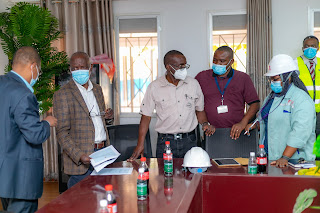
Tadalisika in a meeting with a visiting delegation

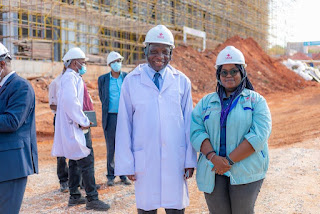
The experience gave her the confidence to lead a site tour when the Minister of Infrastructure Housing and Urban Development and other officials visited to see the progress of works.

Tadalisika plans to pursue a Masters in Sustainable Construction or Infrastructure because she wants to gain expertise in the green built environment to promote green, inclusive infrastructure in Africa.

She names her role models as Dr. Nike Folayan and Mopelola Olatunji who are accomplished British and British-Nigerian female engineers respectively.

Tadalisika is an avid reader and a tea and coffee addict whose passion is fighting climate change, and promoting gender equality and sustainable infrastructure.

Looking at the pace Tadalisika has risen, not even the sky is the limit for her.

She is likely to get to where she dreams to go and make it big in the engineering profession.

At 23, this young engineer has achieved what many youths at her age have not achieved.

Wednesday, 5 June 2019

Zambia’s Self Declared Satanist Speaks Out Against Christianity

By Paul Shalala

Alex Chisulu
People have called him a mad man, a witch, all sorts of names but he calls himself a good man.
Renting a small house in Kitwe’s bustling Bulangililo neighbourhood is 46 year old Alex Mwamba Kazhimbala Chisulu, a controversial Satanist who has left a community divided over his religious views.
The walls inside his house are decorated with Satanic symbols which he proudly explained during an interview.

He is actually a former Catholic Priest who controversially converted to a religion which most Zambians hold with fear and suspicion: Satanism.
For years, he has confused his neighbours, annoyed his landlord and created tension in the area were he lives.
Since he is an open Satanist, people around him have linked all their misfortunes to him.
“Even witchcraft, sicknesses and other misfortunes are blamed on me, but am a clean man, I have never touched or slapped anyone, am clean,” he said in an exclusive interview.
To understand why Chisulu is such a divisive figure, it is important to get back to the bottom of the matter and trace his history.
Chisulu was born in 1972 in the northern Zambian town of Solwezi, a mineral rich town which has been millions of investments by multi-national conglomerates in the recent past.
He is a highly educated man who earns his living by conducting tuitions to adults in his house.
People who drive expensive cars come in the evening, park their vehicles and sit down to learn from a man who does not shy away from being identified as a follower of Satan.
Inside his house is a black board and a box of chalk which he uses for his tuition sessions.

Priesthood
Chisulu says he entered the Saint Augustine Major Catholic Seminary in Kabwe to study for priesthood and spent three years there.
“While at the seminary, I discovered that am a very critical person, I ask too many questions. Here I was studying Philosophy and it gave me room to question many things and understand man. I graduated with a Diploma.”
He boasts that even lecturers knew him as an inquisitive person who questioned everything.
Between 1997 and 2002, Chisulu enrolled at Saint Dominic's Major Seminary in Lusaka were he studied for his Bachelor in Theology, a course which he says was difficult because he was not allowed to question church doctrines.
Some of the Satanic symbols 
in his house
He says despite being critical about the course, he completed and graduated.
“I was later ordained as a Priest in Solwezi and sent to Manyinga, an area which was part of Kabompo District but is now a new district.
“In Manyinga I felt too much opposition because I ran a lot of businesses like chicken rearing, livestock and I was even building the first ever filling station in the area. The 2-3 years I spent there were difficult,” he added.
Chisulu alleges that one day his Bishop showed up at his house in a Land Cruiser and delivered a letter of transfer and gave him a few minutes to pack his belongs and leave for Solwezi.
He was then taken to Saint Kizito in Solwezi were he became an assistant to another Priest.
He said the move annoyed him and he immediately applied for leave of absence.
That is how his priesthood ended.

Enter Satanism
Having left the ministry, Chisulu decided to relocate to the Copperbelt to start a new life.
“I first rented a house in Kwacha township before I moved to Bulangililo were am currently living. Its here were I met this woman who I married but it didn’t last, because of my religion (Satanism) she accused me of all sorts of things and left,” said Chisulu.
I then got a job at Brightway School were I started teaching to earn a living.
He says on July 6, 2016 he experienced something strange which made him shake and felt weak.
“I used to meditate in the morning before class, but on this day I had a strange feeling. I felt a crack on my head, I felt a flash light, my limbs were jerking and I couldn’t teach.”
He says he left school and went home and to date he still feels the jerks.
Chisulu says that experience was his awakening and transformation into a Satanist.
He says he felt something like a snake which went through his spine and came out through the head and since then, his eyes are open and he now knows what is right and what is wrong.
“I practice a religion called Orionism. Satan is the Emperor of the Orion hence I discovered this religion to be Orionism,” he said.
Chisulu says he decided to become a Satanist after much research on the role of religion in life.

His Views On Christianity and Islam
After much research, Chisulu says the theology taught in Christianity and Islam is fake and it is full of violence.
He gives examples mostly from the Old Testament were God killed enemies of the children of Israel or his followers who sacrificed their children to God as examples of violence allegedly promoted by the Bible.
“I got to learn that Christianity is fake, it’s a hoax, its wicked, very evil and its same with Islam which promotes Jihad or Holy War which kills people. The only true religion I came ti understand is Satanism. Satan means the truth according to an ancient Hindi script.”
Chisulu goes on to talk about Genesis 2:17 were the Bible talks about the Garden of Eden and how God instructed Adam and Eve not to eat from the tree of knowledge.
He trashes the Biblical account saying there were lies in God’s instructions and the serpent (He calls it Satan) told them the truth).
“That whole scenario was fake. When I researched, I found out that there was no tree. That so-called tree is actually a man’s spine because it is the center of the body. Jehovah (He calls God as Jehovah) was scared of Adam knowing the truth that is how he lied to him. Most people in Christianity are lost, they were cheated.”
He claims that Christianity and Islam are just a program designed to destroy humanity and that Jesus is a fictitious character.
He wonders why Christians celebrate the death of Jesus instead of resurrection.
He describes it as glorifying violence instead of embracing life.
“What is the purpose of a dead man on the cross to us? Christians are lost, they are cheated, they are confused,” he said.
He goes on to cite many Bible verses were children of God killed their enemies and says violence was promoted in the Bible.
Chisulu claims Christianity has been a threat to world peace and in Zambia since the declaration of the county as a Christian Nation in December 1991, divorces have shot up, deaths have skyrocketed, evil has increased.
He says the only religion which can cleanse the works is Satanism.
Orionism And His Role
Chisulu acknowledges that Satan lost the battle to God but he claims he will have a come back soon.
“Satan is on his way back to victory because he is the truth. If I was given chance on a Television program, I can help people think properly and convert them to Satanism, people are lost.”
He says Christians go to church and make noise and achieve nothing because they are misled.
When asked why he lives in poverty when it is believed that Satanists get a lot of money upon being initiated, Chisulu said Satanism is an awakening and not a business.
“If you join Satanism thinking you will make money then you are in a wrong place. When you are a Satanist, you gain a third eye and the sixth sense. You will be enlightened and be able to see things other people cant see,” said Chisulu.

His Eviction Over Satanism
Last week, Chisulu was given notice by his landlord to vacate his rented house because his neighbours were not comfortable with his presence.
On Saturday as ZNBC reporter Wamundila Chilinda was interviewing him at his house, hundreds of Bulangililo residents gathered in no time.
They started stoning his house, smashing the windows.

Bulangililo residents who gathered to stone Mr. Chisulu
Things could have been worse but heavily armed officers from Riverside Police Station arrived on site within minutes and rescued him.
He was whisked away to an unknown lodge were he has spent the last five nights.
His belongings, a handful of chairs and clothes, are still stuck in his house as he is scared of  being lynched by his neighbours.
A good Samaritan has been paying for his room at a lodge and even bought him some clothes so that he can be changing.
Despite all this, Chisulu still believes Satanism has the real truth and other religions are fake.
“My god Satan has brought me here so that people can come to know the truth, he said.”
He was recently spotted at a popular bar, sipping some cold ones while looking unworried.
In a Christian nation like Zambia, it is not known how far Chisulu will go in practicing Satanism openly.
A number of prominent foreign preachers and South African artist Zodwa Wabantu were denied entry in the country due to what the Ministry of Religious Affairs and National Values calls “Unchristian” beliefs and acts.
By the way, Chisulu says he is now studying for his Master in Business Administration at Cavendish University and he is more normal than people accusing him to be mad.
“When you look at me, do I look mad? Tell me, am I mad?” said Chisulu as he smiled.
Thursday, 25 May 2017

The Kabompo House And Its Significance In Zambia's History

The Kabompo House -Pictures by Tigana Chileshe
By Paul Shalala in Kabompo
The independence of Zambia can not be complete without highlighting the role former President Kenneth Kaunda played. 
Dr. Kaunda's history is not only confined to his childhood town of Chinsali or Lusaka where he has spent most of his adult life.
Kabompo District in the North Western Province is dear to Zambia's founding President.
A visit to Kabompo is not complete without a visit to the Kabompo House where Dr. Kaunda was incarcerated for four months in 1961. 
In March of that year, Dr Kaunda was arrested at his Chilenje House in Lusaka and he was later transferred to Kabompo were he was held until July 1961.
Katiki Sakufola (left) after the interview
This blogger has travelled to Kabompo to track down people who saw Dr. Kaunda while he was in detention.
In a small village, five kilometers away from Kabompo town, i managed to locate Jonas Sakuwaha, the cook who used to prepare food for the then independence leader.
His story is interesting.                                    
"I lived on the Copperbelt with my uncle who was working in the mines in Kitwe. When i returned to Kabompo in 1961, i spoke a bit of Bemba and the British colonialists hired me because they could not understand local languages in Kabompo. I started cooking food for President Kaunda and he was a jovial man," said Mr Sakuwaha while seated on a stool.
The old man, who lives alone in his grass thatched house, added that the former President used to appreciate his food.
"After eating, he used to tell us many stories. He used to assure us that one day Zambia will be free and all of us will have a better life in future. He promised me a job but to date he has not returned, am still waiting," said Mr Sakuwaha.

Mr Sakuwaha also talked about Dr. Kaunda's choice of foods.

"In the morning, he used to drink tea with lemons. He used to refuse coffee or coffee."
Two kilometers away from Mr Sakuwaha's village is the residence of Katiki Sakufola who was a messenger just before Zambia's independence in 1964.
Jonas Sakuwaha (left), the cook who served Dr Kaunda in Kabompo
He and two other messengers guarded Dr Kaunda in his Kabompo House 24 hours a day because at that time, the colonialists had no Police officers in Kabompo.
"We used to take turns in guarding our future President. He used to read a lot and told us too many stories. Whenever we took him to the Kabompo river to work, he would take cover whenever he hears a plane flying past. He was scared of being bombed," said Mr Sakufola.
Mr. Sakufola said he was present when a huge snake is said to have passed in between Dr. Kaunda’s legs as he rested under a huge tree which still stands today near the Kabompo House.
"On a Sunday in March 1961, we did not take Mr Kaunda to the river. So he spent the day under the tree, reading his books. As he sat there, a huge snake came and it passed between his legs. I then whistled for my fellow messengers to come so we can kill it but it ran away," he said.

The tree under which Dr Kaunda used to seat
The National Heritage and Conservation Commission has taken care of the tree where President Kaunda used to rest from.

A Plaque has been placed there with an inscription explaining its significance. 

The Kabompo House caretaker Jean Chipita says youths of nowadays must be grateful to the forefathers who fought for our freedom.
"This house must inspire the young ones to work hard and cherish the freedom that they currently enjoy. Imagine the sacrifice President Kaunda made when he spent four months here just for the sake of our freedom. That was total sacrifice," said Mrs Chipita.
Kabompo may not feature much in the history books but it also has a mark on the freedom struggle.
Despite there being few visitors to this house on an annual basis, its significance is larger than the size of the structure.

EDITOR'S NOTE: This blogger also produced a TV report from this story and it was aired on TV1 on 25 May 2017 and the YouTube link of the video is here.

Friday, 3 February 2017

Photographer Launches 'Week of The Zambian Child' Campaign

A boy carrying a pot
By Paul Shalala

Inspired by the words of Danny Kaye who said: “I truly believe that children are more powerful than oil, more beautiful than rivers, more precious than any other natural resource a country can have,” a Zambian photographer has launched a humanitarian campaign aimed at showcasing intimate portraits of children from across Zambia.

The online campaign dubbed “Week of the Zambian Child” which runs from the 1st to the 9th of February on the Facebook page called Picture Focus Zambia, aims to present captured pictures of children that rise above circumstance and seek to draw attention to their true strength and potential.

“It’s about revealing the human-ness in the portraits in an attempt to tell stories and inspire change. I hope that this “Week of the Zambian Child” will inspire a dialogue about the beauty, diversity and hardship of the child and the need to protect and enhance their well being,” said Tigana Chileshe, the humanitarian photographer behind the campaign.

The 27 year old says he is passionate to advocate on social issues affecting young people and hopes the campaign will be the first step in highlighting the plight that Zambian children face especially in rural areas where issues such as malnutrition and social protection are weak.


A girl dancing at a traditional ceremony
Mr Chileshe, who is also the District Information Officer for the Zambia News and Information Services in Kabompo, says his intimate visual story-telling skills do not disappoint.

“Photography has a powerful ability to address even the most pressing issues at any time and as you will see, some pictures depict children having fun and some images show you a grim picture of children in hard conditions. So it’s not all rosy,” he said.

Asked on where he sees this campaign going, Mr Chileshe said he hopes to galvanize support to raise money to buy clothes and shoes for kids in rural Kabompo District.”


You can follow the campaign using the hashtag #WeekOfTheZambianChild on Twitter.

And on Facebook, you can check out the daily updates of the campaign by ‘liking’ the page Picture Focus Zambia

Sunday, 7 June 2015

Manyinga: From A Roadside Lay By To An Administrative Town

Michael Sata
By Paul Shalala in Manyinga

Manyinga has been a village for decades.

It is actually a bus stop or lay by on the main road between Mufumbwe and Kabompo Districts in the North Western Province.

Buses that ply the Mufumbwe-Kabompo road used to stop at Manyinga to pick or drop passengers.

For truck drivers, Manyinga was their lay by where they used to stop and get a nap before proceeding on their days-long journeys. 

But this roadside community is slowly turning into a town and may possibly be a city in the coming decades.

Since late Zambian President Michael Sata declared it a district in November 2012, Manyinga has seen some change.

It is now an administrative center for this agricultural community.

At its declaration in 2012, Manyinga had no infrastructure befitting a district.

Now government has started constructing various structures to host its various departments.
Over five local and international contractors have been engaged to build the Manyinga District Administration, Civic Center, Police Station and Agriculture offices among others.

Simuliya Trading Limited was given a contract to build the office block for the district administration.

So far, the Chinese-owned company has finished the first slab and is hopeful of completing the whole project by October this year.

Hu Sung is the supervisor at the site and he has concerns about local materials being used to build the structures.

"We will complete in October but this sand we are using is cracking too much. It is delaying our progress," said Hu.
Chingola-based Toshiber Limited is building the Civic Center and two staff houses at the cost of K6.9 million.

35 residents of Manyinga are lucky to have been employed to build their own civic center.
At the construction site
"We commenced works in February this year and so far so good. We hope to complete within the 14 months period we were given in the contract," said Felix Simukoko, Operations Director at Toshiber Limited.

With Manyinga's history of being a farming area, Kashimushi Construction has been contracted to build 16 offices for the Department of Agriculture and works have  have now reached window level.

Government has further engaged Hero Construction Company to build the first ever Police Station in the district and works are at slab level.

Senior Chief Sikufele allocated a huge track of land to allow government build its various departments for better administration of the new district.