Showing posts with label Africa Fact Checking Awards. Show all posts

Monday, 5 January 2015

WM Media Pty Ltd Profiles Paul Shalala And His Journalism Career

By Winston Muleba II, Zambia
Aspire to reach your potential by competing with people who you think you can’t beat says Paul Shalala. 
Shalala is a young journalist and blogger who is based in Lusaka and works for the Zambia National Broadcasting Corporation as a Reporter. 
 “Am a news person and everything about me is about news. I read a lot of literature, newspapers and books. I watch a lot of TV programs especially news, documentaries and history programs. I also like making friends to hear what the common man is thinking and talking about. Am also a dot com baby. I spend most of the time on Twitter and Facebook trying to get latest news and find out what is trending across the world.” he says. 

He says always remember that no one will uplift you and your career if you do not take the first step to leap forward.
Shalala says his specialization in the past six years he has practiced journalism is politics and governance. 
He says he was born on 29th August 1984 at the University Teaching Hospital in Lusaka in a family of seven children.
“My father is Mr Namasiku Kamuti Shalala, a retired teacher now a farmer in Lubanze Village, in Nangoma and my mother is Mrs Monde Phyllis Shalala retired teacher also. I am a Christian, a Seventh - day Adventist. ” he says.
He says he went to Kasalu Basic School in Nangoma area of Mumbwa for his Primary and Junior Secondary School.
“I then went to Mumbwa High School for my senior secondary from 2000 to 2002. I studied for a Diploma in Journalism at the Evelyn Hone College in Lusaka from 2005 to 2007. Currently studying for my Bachelor’s degree at the University of Zambia under Distance Education. I have also done several specialized journalism trainings just to sharpen my journalism skills. I studied Politics, Elections and Good Governance at the International Institute for Journalism in Berlin, Germany, Business and Financial Reporting by the Thomson Reuters Foundation in Kampala, Uganda, Advanced Economic and Governance Reporting by the Thomson Reuters Foundation in Johannesburg, South Africa, Energy and Environmental Reporting as part of the Europe-Africa Young Journalists Programme in Addis Ababa, Ethiopia and Investigative Journalism and Anti-Corruption Reporting by the International Anti-Corruption Academy during a weeklong course at the West Africa Regional Training Center in Accra, Ghana.” he says.
Shalala says in the past years, he has worked in the print, electronic and online media.
“After college, I joined New Vision Newspaper in Lusaka where I worked for close to two years. In 2010 I joined MUVI Television where I worked until February 2012. I then decided to go into freelancing. I wrote for a number of online international newspapers like The Media Project in the USA and The London Evening Post in the UK. In September 2012, I was offered a job as a reporter at the Zambia National Broadcasting Corporation (ZNBC) in Lusaka. That’s where I currently work in the TV1 newsroom. I report mainly on politics and governance for our TV news but off course our stories also air on TV2 and Radios 1, 2 and 4.” he says.
Apart from his TV job, Shalala says he is also a blogger.
“I run my own blog called The Zambian Analyst (www.paulshalala.blogspot.com) where I analyze politics and governance issues in Zambia and the world. A blog is the only place where a journalist can add their own opinion and views to a news item.” he says.
Shalala says he is also a small businessman.
“I own a company called Nangoma Transport Limited which of course is registered by the Patents and Companies Registration Agency (PACRA). The company is a year old and has two public service minibuses that service the Lusaka – Mumbwa route. At the weekend when am off duty at ZNBC, I sometimes work as a minibus conductor. It is fun sometimes to go through the challenges conductors face on a daily basis. I’ve had experiences where a passenger thinks you are illiterate and they start insulting you in heavily broken English and when you respond in the Queen’s language, the confrontation ends because your English sounds superb. I have also had situations where you carry drunk people and they refuse to pay. It is fun being a conductor.” he says.
He says he has received a number of media awards in the past few years he has been practicing journalism.
“In April 2014 I won first prize TV category in the Policy Monitoring and Research Center (PMRC) for my stories and analysis of the constitution making process. On November 14, 2014 I received second prize in the 2014 Africa Fact Checking Media Awards in Nairobi, Kenya for my story on the impact of multi-national mining investments on Zambia’s food security. There were over 40 entries from journalists in 10 African countries. The first prize was won by Edem Srem of Ghana and Kenyan journalist Victor Amadala and myself came out second. My story had a huge impact such that dams were built for the farmers in Mazabuka after my story was aired, a Minister visited the displaced farmers and the plight of the displaced farmers became a priority for stakeholders. This is why I think I won the award. On December 18, 2014 I won the Best Innovation Award at the 2014 ZANEC Media Awards in Lusaka. The Zambia National Education Coalition (ZANEC) awarded me for a story I wrote on my blog on how 20,000 teachers in Zambia under the umbrella of the Zambian Teachers Forum are running a Facebook group of over 15,000 members and a WhatsApp group of over 5,000 members to help teachers find easy swapping from one district to another, mentor new teachers and share best practices of the art of teaching."
Shalala says the Africa Fact Checking Media Awards are a brain child of the collaboration between the Agence France Presse (AFP) Foundation, a sister organization of the AFP news agency in France and Africa Check, a journalism organization based in Johannesburg, South Africa.
“The two organizations introduced these awards to inspire journalists and help them fact check information on the continent. The two organizations encourage journalists in Africa to follow up propaganda and false claims made by politicians, public officials and other opinion leaders to mislead the public. Any journalist in Africa who does a story and fact checks a public claim can enter the awards and walk away with thousands of dollars. Am lucky to have been the only Zambian journalist among the eight finalists from across the continent and I was again the only one from Southern Africa among the three who got the awards.” he says. 
He says when he received his first media award he was happy and motivated to work even more hard to get more awards.
“An award sets you apart from other colleagues when you receive it. International awards just make one feel they can go as far as other countries can go. We always limit ourselves to Zambia but when we take part in these international awards, we actually discover that even Zambians can do It.” he says.
Shalala says Awards open up opportunities.
“A week after I won the Africa Fact Checking award in November 2014, I received an invitation from a Mozambican journalism organization called Sekelekani to go and speak at an international journalism conference on reporting on the extractive industry. Within three days of that invitation, I received another invitation from the Open Society Institute of Southern Africa (OSISA) to speak at their summer journalism academy. Unfortunately the dates for the two invitations clashed and I opted to go to Mozambique where I addressed Mozambican and Angolan journalists and civil society activists in the Indian Ocean resort town of Bilene. My target now is the CNN African Journalist of the Year Awards. In the past years i have entered twice and lost but I haven’t given up. Like Bembas say, one day kakabalika.” he says.

He says on a daily basis Journalists are insulted, beaten and ridiculed but one does not need to give up because there is no easy career on earth.

“All professions are challenging. Prospective journalists shouldn’t join the media fraternity for the fame or making connections. Journalism is a calling. You have to be passionate to do what reporters do. If you are not passionate, you will run away from the profession when faced by a few hardships.” he says.
Shalala says his role model is Rageh Omar, a Somalian-born British journalist who has worked for the BBC and Aljazeera.
“He has received several media awards for his courageous works and was one of a few western journalists to have covered the fall of Saddam Hussein in 2003. His determination to cover sensitive and dangerous stories inspires me a lot. Rageh is a war reporter and that’s what I aspire to do when I have chance to join the international media. I hope to report from war zones like Iraq, Afghanistan and Gaza.” he says.
He urges young people in various professions to try their luck.
“You may never know what response you may get. Don’t be defeated by the word ‘International’. You are also international yourself if you join others from other countries. Believe in yourself and your potential will take you a step further.” he says.
Shalala says he would want the world to remember him as a journalist who strived to raise governance issues and one who rose from a humble background in the villages of Nangoma area of Mumbwa to become an award winning journalist on the continent.
Aspire to reach your potential by competing with people who you think you can’t beat. You can do it. HAPPY NEW YEAR!
For comments: mwenyamuleba@gmail.com / 0966 461 943/ 0950 594 050
(This story was published by WM Media Pty Ltd on 4th January 2015 on their blog. The original story can be read here:  http://winstonmuleba.blogspot.com/2015/01/shalala-second-prize-winner-of-2014.html)

Friday, 5 December 2014

Africa Check Engages Stakeholders To Start Fact Checking Zambia

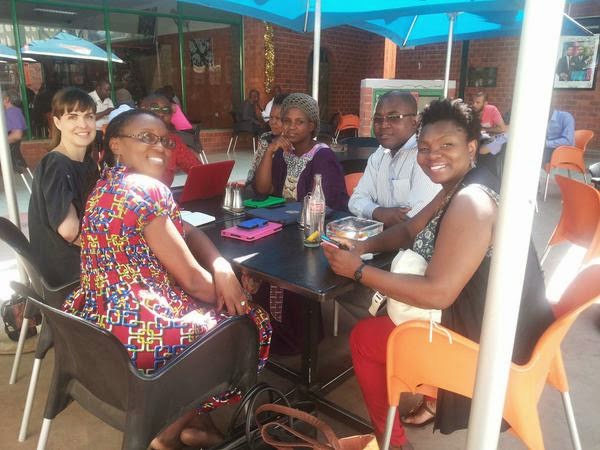
Anim with Zambian Bloggers during the meeting in Lusaka
By Paul Shalala

Africa Check, the Johannesburg-based organisation which is leading the way in promoting factual news on the continent, has started engaging Zambian stakeholders with the hope of kick starting fact checks across the country.

Africa Check Deputy Editor Anim Van Wyk, who was in Zambia for a couple of days this week, has visited several media institutions to find ways in which they could partner in fact checking stories in future.

Anim has so far visited the Zambia Daily Mail and the Zambia National Broadcasting Corporation where she held meetings with editors to find out how they could work together.

This morning, Anim met members of the Zambian Bloggers Network, an organisation composed of about 50 journalists who blog on various issues such as politics, gender, development and reproductive health.

Anim told the bloggers that she was keen to see how they could come on board and help in fact checking stories and public claims.

"I know that in Zambia you have topical issues like the upcoming presidential elections and the constitution. So we would love you people to fact check on the main campaign issues, what candidates stand for and also the issues in the constitution," said Anim during the meeting held at the Arcades Shopping Mall.

She further said Africa Check will in the future start commissioning stories to fact check in Zambia but she encouraged bloggers to also start suggesting stories to be fact checked since they are on the ground.

During the meeting, bloggers raised concern at the lack of adherence to journalism ethics by some Zambians online.

"There is need for professionalism on the internet. People just post stories without verifying and they mislead the masses," complained Sally Chiwama, who blogs on gender and reproductive health: (http://sallychiwama.wordpress.com/)

Another blogger Richard Mulonga, said the internet has made people more aware of what is happening worldwide.

"People now can read anything from anywhere just on their laptops or phones. For those practising journalists, blogs are their only avenue to express themselves without those newsroom restrictions," said Mulonga, who blogs as The Picture Monger: (http://thepicturemonger.blogspot.com/2008/09/picture-monger.html)

Meanwhile, Zambian Bloggers Network Director Brenda Zulu said the low internet penetration in the country is a source of concern.

"Its a pity that very few people access the internet in this country. Most of them access the net on their mobile phone. We need more people online to create an informed nation," said Brenda, who blogs under the name ICT Journalist: (http://brendait.blogspot.com/)

Africa Check in partnership with the AFP Foundation and African Media Initiative are running the annual Africa Fact Checking Media Awards which were held for the first time last month in the Kenyan capital Nairobi.

Tuesday, 2 December 2014

Paul Shalala Addresses Journalism Conference In Mozambique

Paul Shalala poses with Angolan and Mozambican journalists 
Fresh from picking up his second prize at the 2014 African Fact Checking Media Awards in Nairobi, Kenya on 14th November, 2014, ZNBC reporter Paul Shalala embarked on another international engagement, this time around in Mozambique.

Mr Shalala was invited, together with veteran Angolan journalist Mario Paiva, to address the International Conference on Communication and the Extractive Industry which had over 50 participants.

The two day conference was held from 28 to 29th November, 2014 in the Mozambican resort town of Bilene on the shores of the Indian Ocean.

The two visiting journalists shared their experiences in covering the extractive industries in their respective countries.

Sekelekani Communication for Development Executive Director Tomas Vieira Mario, who was the main organiser of the conference, said he invited Mr Shalala to speak at the conference because of his story on the impact of muti-national mining on local farmers in Zambia which won him the second prize of the 2014 Africa Fact Checking Media Awards.

Mr Mario, said he was impressed when he saw Mr Shalala receiving his award in Nairobi and coincidentally his international conference’s main objective was also on the mining industry which prompted him to invite the ZNBC reporter to his country to share his experiences on how he went about the story.

Below is the speech Mr Shalala delivered in his close to 30 minutes address on 29 November to a fully packed conference room which consisted of journalists from across Mozambique as well as local and international civil society organizations:


Muito obrigado

Bom dia.

I come from a country where more than 80% of our foreign exchange earnings is from mineral related transactions. Zambia is a mining country which is endowed with such minerals like copper, diamond, gold, gemstones and some yet to be exploited oil sittings in the western part of the country.

Just like my Angolan colleague Mario Paiva and my Mozambican colleague have lamented, the benefits of the extractive industries in our countries are yet to reach the common man on the ground.

To try and boost transparency in the mining industry, Zambia has joined the Extractive Industry Transparency Index (EITI) and annually, government releases figures of how much mines pay government in taxes.

Despite this, the public is still not aware of the contents of mining agreements which government enters with foreign investors in the mining sector.


WHY WE NEED INVESTIGATIVE JOURNALISM IN COVERING THE EXTRACTIVE INDUSTRY

Normal journalism practice is not enough to highlight the progress, problems and happenings in the extractive industry.

We need investigative journalists to go deeper and expose the wrongs that players in this sector commit.

There are issues of environmental nature such oil spillages, corporate social responsibility and transparency which investigative reporters need to bring out in their in-depth stories.

Investigative journalism is also needed in this sector because it gives context to stories as reporters spend more time and resources to prepare stories that are way above the common copy and paste kind of journalism.


THE ROLE OF THE MEDIA IN THE EXTRACTIVE INDUSTRY

The role of the media in the extractive sector is to show the actual picture on the ground and raise awareness of the important issues prevailing in the areas where investments are being done.

The media is supposed to keep track of all the investments projects and the promises mining firms make to the indigenous people.

This is important as the public would want to know how far a specific project has gone and whether mining firms adhere to the promises they make to people they displace before investing in their areas.

Another role of the media in the extractive industry is to put the authorities and the investors to task over their actions in the sector.

If there are violation of human rights in the sectors, it is the role of the media to highlight such issues so that there is respect of the law in society.

                                                                                                                                       
CHALLENGES THE MEDIA FACES IN COVERING THE EXTRACTIVE INDUSTRY

Like I have heard from the Angolan and Mozambican experiences, the Zambian media too faces the challenge of lacking specialized reporters to cover the extractive industry.

In Zambia, we also lack specialized journalism schools that train reporters to report specifically on the mining sector. Most reporters who report on this sector are usually journalists who have taken trainings in business reporting which is broad in nature.

Many good stories in the extractive industry need time and resources to be well investigated and produced. This calls for news organizations to give reporters enough time to do their stories and enough money to fund their logistics.

However, many editors do not consent to long term stories that would be gathered over a long period of time. They prefer short stories that can be published almost immediately.

Editors too would not commit money to a single story that would take long to be aired or published. This is because editors look at their short deadlines and want to ensure their bulletins or newspapers are full of copy everyday.

With the lack of Freedom of Information Law in Zambia, investigative reporters have the challenge of reporting on some aspects of the extractive industry due to the limitations of how far they can go in accessing some vital information.

For example, reporters can not put to task the Ministry of Finance the total money paid by a specific mining firm in a given district to government in taxes and how much of that money goes back to that town to improve the lives of the people who live side-by-side with the investor.

Am happy to hear that the Mozambican Parliament has passed the Freedom of Information Bill this week and my hope for you our colleagues in the media here in Mozambique is that this law will help you adequately inform the masses out there.


THE ROLE OF THE CIVIL SOCIETY IN THE EXTRACTIVE INDUSTRY

Am happy that this conference has attracted the civil society as these are a good partner to the media in the extractive industry.

The civil society is there to ensure that the people in areas where investors have established their projects are made aware of challenges they may face and their rights.

Specialized civil society organizations in the governance, environment and water sector are critical in ensuring that the extractive industry does not exploit the locals and that authorities play their games according to the laid down rules.

Paul Shalala on a panel of discussants at the conference
It is important that civil society organizations build alliances amongst themselves as fighting for people’s rights is a huge and expensive venture which a local NGO cannot do on its own with its meager resources.

When indigenous people have no resources to litigate over their rights, it is the duty of the civil society to jump in and act on their behalf.

In Zambia, some civil society organizations are in court fighting government after it authorized an Australian investor to set up a mine in the Lower Zambezi National Park despite a sharp reaction and protests from stakeholders.

It is such roles that the civil society is expected to play in the extractive industry to ensure a win-win situation between the locals and the investors.


RECOMMENDATIONS

I wish to encourage the sponsors of this conference WWF Mozambique and Sekelekani Communication for Development to brainstorm on the possibility of establishing annual media awards in the Mozambican extractive sector.

This will encourage more reporters to venture into this sector and specialize their reporting.

Secondly, stakeholders with the financial muscle must periodically sponsor study tours for reporters to visit mining sites and other places for them to get first hand account of the happenings in the area and report accurately.

Finally, I suggest that specialized workshops and trainings must be hosted from time to time to train a group of reporters to specifically report on the extractive sector.


Muito obrigado

Thursday, 20 November 2014

Paul Shalala Wins African Journalism Award


Zambia National Broadcasting Corporation (ZNBC) reporter Paul Shalala has won second prize at the 2014 African Fact Checking Media Awards that were held at the Safari Hotel in Nairobi, Kenya last week on Friday.

The Africa Fact Checking Media Awards, which are sponsored and hosted by the France-based AFP News Agency and the Kenyan-based African Media Initiative, are held annually to award the best three investigative stories produced by African journalists.

AFP Foundation Director Robert Holloway, who announced the winners, said Mr Shalala’s investigative story on the inpact of mining investment on farmers in Zambia was a good piece of journalism worth recognising.

Mr Holloway, said a team of judges decided to award the second prize both to Mr Shalala and Kenyan journalist Victor Amadala because both their stories had a huge impact on society.

Ghanaian freelance journalist Edem Srema walked away with the first prize for his documentary on the illegal mining of gold in Ghanaian water bodies.

On September 25, 2013 Mr Shalala's 12 minutes investigative feature story on the impact on local farmers by multi-national mining investors in Mazabuka and Solwezi, was aired on TV's Morning Live programme.

Last year, the same story was shortlisted for the 2013 African Story Challenge Media Awards but Mr Shalala did not make it among the three winners.

Read the official announcement of the award winner at the Africa Check website: http://africacheck.org/how-to-fact-check/the-african-fact-checking-awards/


The link to Mr Shalala’s original story is here: http://www.paulshalala.blogspot.com/2013/10/the-impact-of-multi-national-mining.html

The award winning 12 minutes video by Mr Shalala can be watched on this YouTube link: http://www.youtube.com/watch?v=NZwczRoPvSs&feature=youtu.be

Saturday, 4 October 2014

ZNBC's Paul Shalala Nominated For Top African Journalism Award

Paul Shalala interviewing farmers in Solwezi
By Bangwe Navilley

Zambia National Broadcasting Corporation (ZNBC) reporter Paul Shalala has been nominated for the inaugural Africa Fact-Checking Media Awards.

Mr Shalala's story on the impact of multi-national mining investments on local farmers in Zambia, is among the eight stories that have been shortlisted for the awards to be held in Nairobi, Kenya in mid November 2014.

The Africa Fact Checking Media Awards are co-sponsored by Africa Check and AFP Foundation, the non-profit arm of the France-based AFP news agency.

The wards are aimed at honouring the best pieces of investigative fact checking journalism work in Africa.


co-sponsored by Africa Check and the AFP Foundation – the non-profit media training arm of the AFP news agency – to honour the best pieces of investigative fact-checking work across Africa this year. - See more at: http://africacheck.org/how-to-fact-check/the-african-fact-checking-awards/#sthash.vAW4WgWd.dpuf

According to an announcement on the Africa Check website, Mr Shalala is the only Zambian journalist among the finalists with the rest coming from Ghana, Kenya, Nigeria, Tunisia and South Africa.

In September, 2013, Mr Shalala carried out a three week investigation on mining activities and their impact on farmers in Mazabuka and Solwezi districts where he discovered that thousands of farmers had been displaced by multi-national companies but they had not been adequately compensated and cared for.

This is the second time the story is being nominated for internationa media awards.

The actual story can be read here: http://www.paulshalala.blogspot.com/2013/10/the-impact-of-multi-national-mining.html

The award winning video can be accessed on Youtube here: https://www.youtube.com/watch?v=NZwczRoPvSs&feature=youtu.be

Lat year, Mr Shalala was nominated for the Africa Story Challenge Media Awards but he did not make it among the top three winners. 


The shortlisted entries are as follows, listed by alphabetical order.
  1. Theophilus Abbah, Terkula Igidi, Hamisu Matazu – Sunday Trust (Nigeria): “Reopening Jonathan’s Bag of Many Promises / Jonathan’s N.163trn Road Projects Await Completion”
  1. Victor Amadala – www.kenyakidz.com (Kenya): “Doctors dispel myth of plastic teeth in babies”
  1. Phillip de Wet – Mail & Guardian (South Africa): “In this microcosm of South Africa, President Zuma’s words ring false”
  1. IniEkott – Premium Times (Nigeria): “Nigerian Senate’s resolution on Imo based on rumour; no evidence state planned IDs for Northerners”
  1. Med Dhia Hammami – nawaat.org (Tunisia): “Enquête sur le gaz de schiste en Tunisie : des profondeurs du sous-sol tunisien aux paradis fiscaux !“
  1. Musikilu Mojeed – Premium Times (Nigeria): “Aviation Minister Stella Oduah in fresh fake doctorate scandal / American education dept, university confirm Stella Oduah’s honorary Ph.D is fake”
7.     Paul Shalala – Zambia National Broadcasting Corporation (Zambia): “The impact of Multi-National Mining Investment on Food Security in Zambia” (article and accompanying video)

8.     Edem Stem, Gifty Andoh Appiah, Nicolas Atta Addo, Ebenezer Tagoe and Eric Agbalekpor – Multtvworld.com (Ghana): “Trading Ghana’s Water for Gold” (video)
 
The full announcement is here: http://africacheck.org/how-to-fact-check/the-african-fact-checking-awards/

  1. Victor Amadala – www.kenyakidz.com (Kenya): “Doctors dispel myth of plastic teeth in babies”
  1. Phillip de Wet – Mail & Guardian (South Africa): “In this microcosm of South Africa, President Zuma’s words ring false”
  1. IniEkott – Premium Times (Nigeria): “Nigerian Senate’s resolution on Imo based on rumour; no evidence state planned IDs for Northerners”
  1. Med Dhia Hammami – nawaat.org (Tunisia): “Enquête sur le gaz de schiste en Tunisie : des profondeurs du sous-sol tunisien aux paradis fiscaux !“
  1. Musikilu Mojeed – Premium Times (Nigeria): “Aviation Minister Stella Oduah in fresh fake doctorate scandal / American education dept, university confirm Stella Oduah’s honorary Ph.D is fake”
  1. Paul Shalala – Zambia National Broadcasting Corporation (Zambia): “The impact of Multi-National Mining Investment on Food Security in Zambia” (article and accompanying video)
  1. Edem Stem, Gifty Andoh Appiah, Nicolas Atta Addo, Ebenezer Tagoe and Eric Agbalekpor – Multtvworld.com (Ghana): “Trading Ghana’s Water for Gold” (video)
- See more at: http://africacheck.org/how-to-fact-check/the-african-fact-checking-awards/#sthash.vAW4WgWd.dpuf