Monday, 14 November 2022

Zambian Student Dies While Fighting In the Russia-Ukraine War

By Paul Shalala 
Mr. Kakubo -Picture courtesy of
his Facebook page


A 23 year old Zambian student studying Nuclear Engineering in Russia has died in Ukraine while fighting on the war front. 

Lemekhani Nyirenda was a student at Moscow Engineering Physics Institute. 

Two years ago, Mr. Nyirenda was convicted for drug possession and sentenced to 9 years and six months in jail. 

According to records from the Zambian Embassy in Moscow, he was serving his sentence at Tyer Medium Security Prison on the outskirts of Moscow. 

While studying at the Russian university, Mr. Nyirenda found a part time job at a courier company and it is reported that one day as he was delivering goods, he was stopped and searched by the Russian Police. 

He was allegedly found with drugs, a crime which led him to serve two out of his 9 years jail term before he met his fate in Ukraine. 

At a press briefing held in Lusaka, Zambia’s Foreign Affairs and International Corporation Minister Stanely Kakubo broke the news of the student’s demise. 

“The Ministry is saddened to inform the nation that, on 9th November, 2022, it was notified of the demise of Mr. Nyirenda, at the battlefront of the conflict between Russia and Ukraine. Through the Embassy of the Republic of Zambia in Moscow, the Ministry immediately proceeded to verify this information where it was established that Mr. Nyirenda indeed passed away on 22nd September, 2022, in Ukraine,” said Mr. Kakubo. 

Circumstances of his recruitment and travel to Ukraine are still unclear. 

In recent months, with Russia facing huge resistance and loses on the battlefront in Ukraine, social media stories of prisoners in Russia being recruited to fight in Ukraine surfaced. 

The Zambian government is now asking for answers on how its citizen found himself on the battlefront. 

“The Zambian government has requested the Russian authorities to urgently provide information on the circumstances under which a Zambian citizen, serving a prison sentence in Moscow, could have been recruited to fight in Ukraine and subsequently lose his life,” said Mr. Kakubo. 

Following his death, Mr. Nyirenda’s remains have now been moved to the Russian city of Rostov awaiting repatriation to Zambia. 

Mr. Kakubo has visited the family of the deceased to update them on the developments. 

But when reached for a comment by this blogger, Mr. Nyirenda’s family refused to comment, citing privacy. 

Zambia has 711 students studying in Russia, 555 of whom are on government sponsorship while the remainder are on self sponsorship. 

The deceased was on government sponsorship. Zambia has thousands of Russian trained professionals in fields such as medicine, engineering and mathematics. 

Russia was one of the first countries to recognize Zambia’s independence in 1964 and maintains a cultural center in Lusaka. 

On an annual basis, Zambian students get government scholarships to study in Russia.

Sunday, 16 October 2022

Zambia Starts Process To Abolish Death Penalty

By Paul Shalala 
Mr Haimbe with a UN official -Picture by HRC

Zambia has started the process to abolish the death penalty following decades of failure to implement it.

Since January 1997, no Zambian citizen has been executed as successive Presidents have been declining to sign the execution orders for those condemned to death by the courts of law. 

This is on the basis of Zambia having been declared a Christian Nation early in the 1990s by President Frederick Chiluba and since then, no Zambian President wants to preside over an execution. 

In the last 25 years since the hang man executed a prisoner at the Mukobeko Maximum Security Prison in Kabwe, lobbying for the abolishment of the death penalty has been loud. 

Both local and international non-governmental organisations have voiced out on the matter, encouraging Zambia to join an international group of countries which have done away with the law. 

According to Zambian laws, a person can only be sentenced to death if they are convicted of any of the three capital offences: treason, murder and aggravated robbery. 

In May this year, President Hakainde Hichilema announced that government would start the process to abolish the death penalty. 

President Hichilema repeated the promise last month when officially opening the Second Session of the 13th National Assembly. 

Since then, the Ministry of Justice has moved quickly and started the process to repeal laws which border on the death penalty. 

During the commemoration of the World Day Against the Death Penalty on October 10, Justice Minister Mulambo Haimbe announced that the process to abolish the death penalty is now in full gear.

“The government through my Ministry has already commenced the process of amending the Penal Code and the Criminal Procedure Code. Part of the review relates to amending provisions relating to mandatory death penalty for anyone convicted of treason, murder and aggravated robbery,” said Mr Haimbe. 

He further revealed that Cabinet had already endorsed the review process and what is remaining now are consultations before the law can be amended, leading to the abolishment of the death penalty. 

“Our commitment to abolishing the death penalty is anchored on our conviction towards protecting the sanctity of human life and should never be taken as trivilising the suffering that victims of capital offences endure,” he added. 

For those who were there at the Mukobeko Maximum Security Prison when the last execution was conducted 25 years ago, news of the abolishment of the death penalty excite them. 

“On that day, the whole prison was quiet. The Officer-In-Charge slaughtered a cow to cheer us up but that didn’t work, we were all sad,” said Godfrey Malembeka, who now campaigns for the welfare of prisoners and ex-prisoners. 

Upon being released from prison, Dr. Malembeka formed Prisons Care and Counselling Association (PRISCCA), a non profit which he uses as a platform to campaign against the death penalty. 

But the most vocal of all against the death penalty is the church mother bodies. 

Zambia has three such bodies and one of them has not hidden its opposition to the piece of legislation. 

“The death penalty violates the rights to life and protection against torture and other cruel, inhuman or degrading treatment or punishment. Additionally, the mandatory death sentence for capital offences violates the fundamental right to equal protection of the law as enshrined under Article 18 of the Constitution,” said Father Emmanuel Chikoya, Secretary General of the Council of Churches in Zambia, a body which represents protestant churches in Zambia. 

Fr. Chikoya, who also sits as a Commissioner at the Human Rights Commission of Zambia, says the death penalty and torture are similar as they are both cruel and inhuman. 

The United Nations campaigns for the abolishment of the death penalty. 

UN Secretary General Antonio Guterres has in the past been quoted as saying 'the death penalty has no place in the 21st century.' 

Since independnce in 1964, Zambia has signed and ratified many international protocols. 

For example, in 1998, Zambia ratified the United Nations Convention against Torture and other Cruel, Inhuman or Degrading Treatment or Punishment. 

However, the country has not yet domesticated this convention and security forces still torture suspects and in some cases, suspects die in custody under interrogation. 

The United Nations now wants Zambia to expedite the process of abolishing the death penalty. 

“The review of Zambia’s Penal Code and Criminal procedure Code offer the opportunity to make tangible progress to leave the death penalty behind. Abolition in law also entails amendments to defence acts and military codes and constitutional reforms to remove capital provisions if any and explicitly prohibit the death penalty,” said Beatrice Mutali, the United Nations Resident Coordinator in Zambia. 

The European Union, which is supporting the Zambian government is constitutional reforms, is pledging funding to abolish the death penalty. 

“The European Union and the Federal Republic of Germany are contributing almost 26 million euros to a project called EnACT. It stands for Enabling Access to justice, Civil society participation and Transparency in the areas of the rule of law, human rights and accountability,” disclosed Bruno Hanses, the Deputy Head of Mission at the EU Delegation to Zambia. 

Under this project, the EU will help Zambia in evidence based legal reforms which include the abolishing of the death penalty and review of the Penal Code and Criminal Procedure code. 

As at December 2021, Zambia had 257 death row inmates who were being held at the condemned section of the Mukobeko Maximum Security Prison. 

The inmates, who wear white uniforms, live in small cells which are isolated from lifers and other convicts within the prison. 

Over the years, successive Presidents having been using their Prerogative of Mercy to commute death sentences into life sentences on days such as African Freedom Day (Africa Day) and Independence Day to reduce on congestion in the Condemned Section. 

According to UN records, 170 countries have so far abolished the death penalty or introduced a moratorium on the death penalty or have suspended executions for 10 years. 

Of these, 24 countries are in Africa and they include states like Liberia, Central African Republic and Equatorial Guinea. Once Zambia abolishes the death penalty, it will join a global coalition against the death penalty which are now considered as role models.

Just this week, Information and Media Minister Chushi Kasanda said the Friday sitting of Cabinet approved the draft bills which are meant to help abolish the death penalty.

Below is her statement:

"The following were the decisions made by Cabinet, in order to facilitate service delivery to the people of Zambia based on the ruling Party Manifesto and in accordance with the transformation Agenda for Government going forward:

(a)   The Penal Code (Amendment) Bill, 2022.

Cabinet approved, for publication and introduction in Parliament during the current sitting, a Bill entitled “The Penal Code (Amendment) Bill, 2022.” The object of this Bill is to amend the Penal Code so as to replace the death penalty with life imprisonment; and repeal the offence of defamation of the President.

The Penal Code Act, Chapter 87 of the Laws of Zambia, was enacted in 1930 to establish a code of criminal law and penalties of criminal offences. However, from the time of its enactment, the Penal Code has never been reviewed and it contains archaic provisions including the death penalty and the offence of defamation of the President.

(b)   The Criminal Procedure Code (Amendment) Bill, 2022.

Cabinet also approved, for publication and introduction in Parliament during the current sitting, a Bill entitled “The Criminal Procedure Code (Amendment) Bill, 2022.”

Like the Penal Code (Amendment) Bill, the objectives of the Criminal Procedure Code (Amendment) Bill are to replace the penalty of death with life imprisonment and repeal the penalty for defamation of the President. The Criminal Procedure Code Act, Chapter 88 of the Laws of Zambia, was enacted in 1933 to facilitate the application of the Penal Code, Chapter 87 of the Laws of Zambia, in matters relating to the procedure for criminal cases.

Similarly, from the time of its enactment, the Criminal Procedure Code has never been reviewed and it also contains archaic provisions, including the death penalty and imprisonment for defamation of the President.

Cabinet unanimously agreed that in accordance with the principles of the New Dawn Administration, the enactment of the two Bills will greatly promote the right to life as enshrined in the Constitution, and that further, in amending the two laws, Government will ensure that Zambia conforms to international best practice and standards on the right to life and other freedoms."

Friday, 14 October 2022

TechCamp Addis Ababa: An Eye Opener For Africa

The Author at the training
 By Paul Shalala

From 28 September to 3 October 2022, I was privileged to be in the Ethiopian capital Addis Ababa were the United States government hosted a TechCamp whose aim was to train Ethiopian professionals in media literacy.

A TechCamp is a training opportunity which the US Government uses in various parts of the country to teach locals on various skills they need to use locally.

The three-day training attracted over 60 young Ethiopians who came from various fields: journalists, fact checkers, web developers, doctors, engineers and many other professionals.

TechCamp Addis Ababa was held under the theme “Empowering Ethiopians through media literacy.”

10 of us were selected by the State Department to facilitate the trainings.

The trainers came from Lesotho, Tanzania, Nigeria, Ethiopia, Zambia and the USA.

I have no doubt that my selection to be a trainer was based on the fasct that for 12 years now, i have been running a blog The Zambian Analyst which has won me several media awards. I have also been a successful social media influencer who is followed by thousands on Facebook, Twitter, Instagram, LikedIn and many other online platforms. My participation in the the Mandela Washington Fellowship at Syracuse University in New York in 2016 is just the icing on the cake for my career, am a committed US alumnus and this has brought me closer to the State Department and i take part in its activities worldwide.

The fellowship is a flagship youth program run by the State Department which takes 700 African youths annually to various US universities to sharpen their leadership skills over a period of six weeks.

In Addis Ababa, I was given an opportunity to facilitate sessions on the topic “Utilising the Digital Space to tell stories.”

In one of my trainings

In my sessions, I showed how Ethiopian professionals can use their influence on social media to be role models in fact checking, sharing credible information and promoting a culture of using the digital space to promote unity in the country.

Through the lessons, I also showed the trainees how they can tell stories using picture, videos and text from any mobile phone which has access to the internet.

One interesting aspect which most trainees didn’t expect was monetization of digital storytelling.

I took them in various ways they can use their digital platforms like Facebook and YouTube to make money and earn a living.

Of the 10 of us doing the trainings, two were the most popular, due to their unique topics.

On average, a trainer was allowed to have 5 or so trainees but for Josephine Dorado and Mandolin Kahindi, their sessions attracted over 20 trainees at a time.

Josephine, an American citizen who now lives and works in Cape Town, South Africa, delivered lessons on Empathy Engines: Combating Disinformation through Immersive Experiences (webXR).

The trainers and the organisers
Her practical lessons were always over subscribed and on the final day of the training, she gave out an unscheduled one hour training to the participants.

Mandolin was another most sought after trainer.

The Tanzanian journalist came to Addis Ababa with his mobile video equipment and taught the Ethiopian professionals on the topic Mobile Video Production Skills for Journalists: Producing Innovative and Compelling Videos.

Using the training itself as an area for filming, Mandolin allowed his trainees to get videos of other trainings and in the end, he helped them produce compelling videos which they shot, edited and produced on their mobile phones.

This made the trainees learn how they could utilize their mobile phones to tell stories from any part of the country.

Like Josephine, Mandolin also presented an unscheduled one hour training on the final day due to the overwhelming demand from the trainees.

Being the first TechCamp for me, I learnt a lot especially that the organisers showed so much respect and interest for us to share what we do in our day to day lives.

Trainers and Trainees at the Friendship Park

It was an opportunity for me to also see how Addis Ababa had grown from the last time I had visited it a couple of years before.

With the ongoing tensions in Ethiopia, TechCamp Addis Ababa gave the professions tools which they can use to verify fake news as well as report credible and accurate news.

In this era where lies spread faster than the truth, the training helped many Ethiopians know where and how to find credible news which they can rely upon.


In the end, TechCamp Addis Ababa showed me that Africa needs more of such trainings to enlighten the citizens and fight disinformation and misinformation.

If possible, more US Embassies across the continent need to apply to the State Department to host TechCamp in their host countries.

This will help impart more skills in local professionals on the continent.

I went to Addis Ababa with many expectations and when I departed Bole International Airport for Zambia, I was sure that all my expectations had been met.

Trainers having dinner at a restaurant
Thanks to the State Department for this awesome opportunity and if granted another opportunity to facilitate at another TechCamp in future, I would definitely jump on the opportunity.

Thanks to Jenny Beth Aloys (JB) and Manuel Pereira Colocci (Manny) from the State Department for organizing this great event.

Thanks too to the guys at Google Development Group (GDG) Ethiopia, Manuel, Bereket and others who made sure our stay in Addis Ababa was as comfortable and as fulfilling as home.

The GDG team made sure the trainers refreshed their minds every evening by taking them to cultural events and traditional restaurants were they could watch local musicians and dancers perform live on stage.The highlight of those nights was Yod Abyssinia, a traditional restaurant were they sale exotic Ethiopian food enjoyed while one is watching cultural perfomances.

In the end, thanks to all the trainees for sparing their time and listening to us as we trained them, it was such an awesome experience.

Sunday, 18 September 2022

Travelogue: President Hichilema Strikes Deals For Zambia in Eswatini

By Paul Shalala in Manzini, Swaziland

It is one of the smallest countries in Africa, the last absolute monarch on the continent.

The Kingdom of Eswatini, formerly named Swaziland is a landlocked country in Southern Africa.

As Chief Marketing Officer of Zambia, President Hakainde Hichikema was in Eswatini in June this year to make business.

He was in the Kingdom of Eswatini for the first time as Head of State at the invitation of King Mswati III.

From June 3 to 5, 2022 I covered President Hichilema’s state visit to the mountainous kingdom.

Commerce, Trade and Industry Minister Chipoka Mulenga and Tourism Minister Rodney Sikunda accompanied the President.

Manzini, the industrial hub of Eswatini was the perfect city for the President’s business trip.

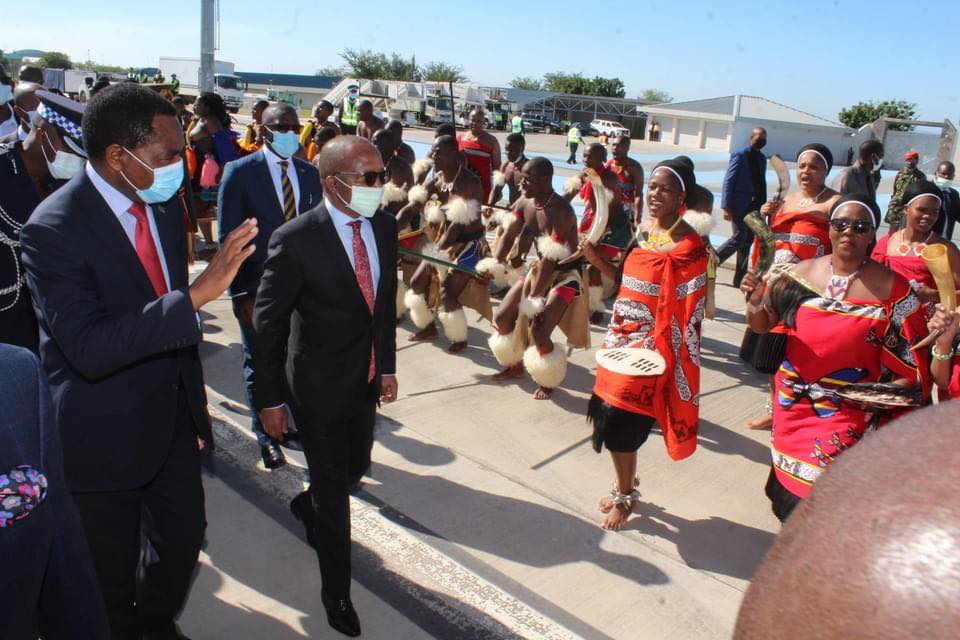
At the Royal Pavilion of the King Mswati III International Airport, President Hichilema was welcomed by Eswatini Prime Minister Cleopas Dlamini.

He later inspected a Guard Honor mounted by the Eswatini Defence Forces.

In this deeply conservative country, President Hichikema also enjoyed some cultural performances.

Dancers clad in half naked attires performed different dances much to the amusement of the Zambian delegation.

Later, the President was driven to Lozitha Palace, the official residence for King Mswati III.

Here, he met the monarch who had been waiting for him.

President Hichilema inspected another Guard of Honor.

Later, the two Heads of State went into private talks which lasted hours.

After the talks, they exchanged presents.

President Hichilema used the occasion to inform his host that Zambia is interested in the coal which the Kingdom produces in large quantities.

“I hear your country produces a lot of coal. We need it, we have just signed a deal with the Democratic Republic of Congo to produce electric vehicles. So we need your coal,” said President Hichilema.

In the evening, President Hichilema and King Mswati III held a private welcome dinner.

The following morning, President Hichikema was driven east of the city of Manzini where he toured the Sidvokodvo Dairy Farm which is one of the largest dairy producers in the kingdom.

“We have made many investments and this farm is just one of them, “ said Old Mutual Chief Executive Officer Muzi Bell.


President Hichilema was surprised to learn that Eswatini has a deficit in dairy produce.

He called on exchange visits and collaboration between the two countries.

“Am a big dairy producer myself and I want to encourage the Ministry of Livestock and Fisheries to work with you and see how you can collaborate,” he added.

The Sidvokodvo Dairy Farm milks its dairy cattle twice a day and produces 153,000 liters of milk a month.

“Milking is done by our highly mechanized milking system which is handled by highly trained workers. These dairy cows you see here, produce milk for a minimum of 10 years,” said Eswatini Dairy Herd Manager Oscar Ndzimande.

At the farm, President Hichilema was shown how the company takes care of heifers.

The President appreciated the technology and effort the country is making in making livestock production a viable business.

Eswatini Dairy is a collaboration between the Eswatini Public Service Pension Fund, Old Mutual and the Eswatini

On the second day of the state visit, President Hichikema celebrated his 60th  birthday.

The Seventh-Day Adventist (SDA) Church in Eswatini held a special service for the Head of State who is also an ordained Elder and an invested Master Guide in Zambia.

The service was held at the Royal Villas in Manzini.

President HICHILEMA also spoke of how God had guided and protected him as he fought to lead the country.

Three Cabinet Ministers and a Member of Parliament from Eswatini attended the service.

In the afternoon, the President went to the Ludzidzini Royal Residence where he visited the Eswatini Queen Mother Indlovukazi Queen Ntombi Tfwala.


The Queen Mother is a powerful figure in the Kingdom and her posters are hung in all public places alongside that of her son King Mswati III.

President Hichilema was received like a son, he was given various presents by the Queen Mother.

“I give you these crafts made by hand by our women here in Eswatini,” she said.

President Hichilema too gave the Queen Mother a huge Zambian painting depicting the African Amarula tree.

Later that evening, President Hichilema went back to the Zolitha Palace for the highlight of his state visit.

In the presence of King Mswati and himself, Zambia signed two Memoranda of Understanding with Eswatini.

The MoUs in Tourism and Diplomacy were signed by Zambia’s Tourism Minister Rodney Sikumba and the Foreign Affairs Minister of Eswatini Thulisile Dladla.

The MoUs are meant to establish a framework to the advancement of institutional and business cooperation between Zambia and the Kingdom of Eswatini in the tourism sector.

The cooperation between the two countries in the field of Tourism will include among others,

1. Mutual corporation

2. Joint Tourism Marketing

3. Exchange of staff and information

4. Twinning of products

5. Promotion of cultural tourism

6. Tourism training

The two countries will now create a bilateral technical committee on tourism within the Joint Permanent Commission (JPC) to ensure implementation of this MoU.

 That same evening, King Mswati III hosted a state banquet for President Hichilema at the Lozitha Palace.

The banquet was spiced up with birthday festivities.

King MSWATI delivered a birthday cake to his visitor.

Like a birthday boy, President Hichilema did nit waste time in blowing the candles, much to the excitement of hundreds of guests who attended the state banquet.

King Mswati used the occasion to wish President Hichilema a happy birthday.

“On behalf of the people of Eswatini, I wish you Your Excellency a Happy Birthday,” said the monarch as he ked his guests into singing birthday songs.

In his speech that night, the Eswatinin monarch also appreciated the role Zambian expatriates are making in the Kingdom.

“We have many Zambians who are doing a good job in this country. We have them in the education sector, in construction and other sectors. Some are even our in-laws, they have married here,” said King Mswati III.

And in his speech, President Hichilema thanked the Eswatini Monarch for having played a positive role in Zambia’s transition after the general elections last year.

“Many Ma-Swati may not know that His Majesty mediated after our elections last year. As a father, he spoke to me and also spoke to my predecessor. He ensured that there was peace during the transition and for that, we the Zambians are very grateful,” said President Hichilema.

The head of state also called on African countries to increase trade amongst themselves.

“We do not need to import beef products from Denmark when we have them readily available in our region. Let African countries trade more amongst themselves. This will ensure we maintain jobs and reduce poverty,” he added.

During the state banquet, seven of the eleven wives of King Mswati III were present.

The night was spiced up with traditional performances.

On the final day, President Hichilema was driven to the Royal Pavillion of the King Mswati III International Airport for departure.


King Mswati escorted him

As per diplomatic etiquette, he inspected a Guard of Honor.

Later, he spent over 10 minutes, appreciating the cultural performances at the airport.

Because of this state visit, Eswatini Air, the national flag carrier announced that it will soon have direct flights into Zambia.

This is expected to raise the tourist arrivals from either countries.

Trade in a number of commodities will now be done directly between the two countries.

President Hichilema flew out of Manzini knowing very well that the trip was a success as he opened up new trade routes for Zambian goods.

During this trip, he was able to strengthen the relations between the two countries.

Pictures courtesy of State House

Wednesday, 29 December 2021

Tadalisika Zulu: An Ambitious Young Zambian Engineer

By Paul Shalala

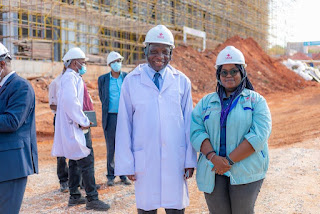
Tadalisika Zulu with Minister of Infrastracture Charles Milupi
when he toured the KK International Airport project site

She was born on the 12th of October 1998 in Lusaka

Tadalisika Zulu is a third born child in a family of four.

Growing up, mathematics was her favourite subject and she says she enjoyed doing calculations.

Her performance in class made her attempt what was not imagined at the time.

“At the age of 10, I attempted the Grade 7 exams as a 5th Grader in 2008. I passed the exams and I went to St. Mary’s Secondary School in Lusaka for Grade eight. I later went to St. Monica’s Secondary School in Chipata for my Senior Secondary,” she said in an interview.

Tadalisika completed Grade 12 at the age of 15, three years ahead of what mostly consider the normal age for a Sugo in Zambia.

“I turned 15 years a week after I started writing the Grade 12 examinations. My love for mathematics increased throughout high school and it became my best subject. I was so confident in my skills that I was looking forward to writing the math exam because I knew it would be an automatic distinction.”

As expected Tadalisika, got a distinction in mathematics.

While awaiting her Grade 12 results, Tadalisika was in deep thoughts, trying to gather her thoughts on which course to pursue.

Her best two courses were Aeronautics or Civil Engineering because they both involve mathematics and creativity.

Tadalisika supervising some workers

During her gap year, she lived with her family in Kabompo District of North Western Province.

While in Kabompo, Tadalisika noticed the lack of proper infrastructure and this made her resolve to pursue engineering even stronger.

In 2015, she enrolled at Wuhan University of Technology and four years later, she graduated with a Bachelor of Engineering in Civil Engineering.

“I returned to Zambia and began my internship at the Department of Public Infrastructure under the Ministry of Housing and Infrastructure Development. As an intern, I worked on several projects before I was appointed as the Clerk of Works at the New China-Aided International Conference Center including the new Maina Soko Military Hospital,” said Tadalisika.

Currently, she is the Clerk of Works at the construction site for the new China-Aided Zambia International Conference Center.

In the beginning, most of casual workers she supervised thought she was just a translator and not an engineer.

Her young age seems to have convinced these workers that Tadalisika is employed as an interpreter as she speaks fluent Chinese.

Being the only female engineer and the youngest on the team, Tadalisika says she usually kept a low profile when big delegations made site visits.

“I was lucky to become an InnovateHer mentee under When Females Lead and Association for Black and Minority Ethnic Engineers (AFBE-UK). The program taught me to have more confidence in myself as an engineer. My mentor taught me that being a young black female engineer is a strength, not a disadvantage,” she revealed.

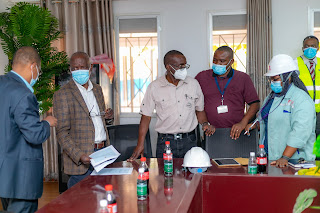
Tadalisika in a meeting with a visiting delegation

The experience gave her the confidence to lead a site tour when the Minister of Infrastructure Housing and Urban Development and other officials visited to see the progress of works.

Tadalisika plans to pursue a Masters in Sustainable Construction or Infrastructure because she wants to gain expertise in the green built environment to promote green, inclusive infrastructure in Africa.

She names her role models as Dr. Nike Folayan and Mopelola Olatunji who are accomplished British and British-Nigerian female engineers respectively.

Tadalisika is an avid reader and a tea and coffee addict whose passion is fighting climate change, and promoting gender equality and sustainable infrastructure.

Looking at the pace Tadalisika has risen, not even the sky is the limit for her.

She is likely to get to where she dreams to go and make it big in the engineering profession.

At 23, this young engineer has achieved what many youths at her age have not achieved.

Tuesday, 28 December 2021

The fight To Protect The Bat Migration In Zambia Rages On

By Paul Shalala 
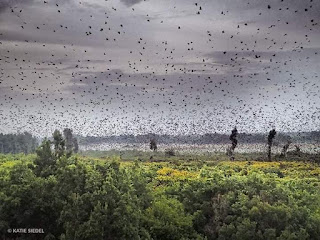
Bats arriving in the Kasanka National Park
 - Picture by Katie Siedel

At stake is the survival of ten million fruit bats which annually make their pilgrimage from the forests of the Democratic Republic of Congo to the Kasanka National Park in Chitambo District in Zambia.

This is considered the largest mammal migration in the world.

The fruit bats, whose scientific name is Eidolon Helvum, make this journey every year starting in early October and they stay in the park until late December. 

They come to the Kasanka National Park to eat fruits and on their way, the bats pollinate plants and ensure nature thrives. 

However, this annual pilgrimage is threatened by human activities. 

A huge chunk of land near the park has now been turned into a farm and stakeholders are getting worried. 

To put it into context, the Kasanka National Park is the home of the bats when they land in Zambia. 

The park is managed by the Kasanka Trust Limited, a non governmental organisation which has huge interest in the survival of the bat migration. 

Around the national park is the Kafinda Game Management (GMA) area which covers almost the entire Chitambo District in Central Province. 

This GMA is a buffer and protects the park from humans. 

Lake Group, a conglomerate which has several subsidiaries across Africa and the Middle East, seeks to establish a huge mixed use farm in the Kafinda GMA which is aimed at creating 1,000 jobs. 

Some of its subsidiaries are Lake Oil, Lake Gas, Lake Steel, Lake Petroleum which runs several filling stations on the continent, Lake Trans which is the transport arm while Lakes Gas specialises in LPG and many others. 
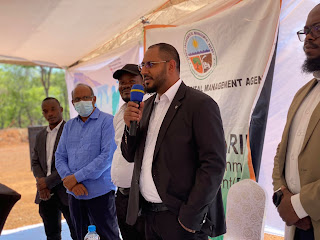
Lake Agro Industries Managing Director
Abdulaziz Ahmed speaking at the public hearing
 - Pictures by ZEMA


Lake Agro is now establishing a farm on a 3,000 hectares piece of land in the Kafinda GMA which the firm acquired from Chief Chitambo. 

The firm has gone ahead to clear a huge chunk of land and planted maize, wheat and soya beans. 

Nine center pivots have already been installed and are irrigating the fields. 

This is despite their Environmental Impact Assessment (EIA) not being approved by the Zambia Environmental Management Agency (ZEMA). 

The Environmental Management Act Number 12 of 2011 and the Environmental Impact Assessment Regulations; SI. No. 28, of 1997 all provide for any project of this magnitude to be approved by ZEMA before any works can commence. 

Sensing that Lake Agro had already started works, ZEMA issued the company with a stop order on 11th October 2021. 

The stop order was signed by the ZEMA Director General and it read in part: “You are ordered to......... immediately cease the operation of all project activities at the project site. These activities include but not limited to land clearing, water abstraction from Luombwa River, operation of center pivots, maintenance of farm and support equipment, landscaping....” 

Lake Agro Industries received and date stamped the stop order at its Ndola office on 13 October 2021 but did not abide by it. 

By 29 October, 2021 when ZEMA held its public hearing at the project site, all farm activities were operating normally. 

Possible Impact of the Agro Project on Biodiversity 

As stated earlier, the project has already kicked off despite not being cleared by regulatory authorities. at the public hearing, Lake Agro Industries General Manager Surya Rao Adapa gave an overview of what the firm has already done in Chitambo so far. 

“We have already developed 560 hectares of land and planted three crops. We have already invested $9 million and paid a lot of taxes to authorities, “said Mr Adapa. 

As part of its legal requirements to seek permission to kickstart its agriculture project in the Mapepala and Nabowa areas of Chitambo, Lake Agro industries prepared an Environmental Impact Assessment which was presented at the public hearing. 

This blogger attended the hearing and now analysis some of the plans made by the investor. 

Lake Agro contracted a local firm called Global Environmental Consultancy to prepare the EIA report which was presented to ZEMA. 
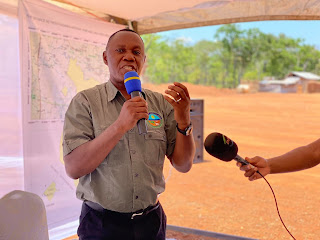
ZEMA Director of Operations Morrison Songwe


The organisation’s Lead Consultant Gillian Simfukwe made a presentation at the hearing. 

Mr Simfukwe said the project is aimed at increasing crop production by irrigation to enhance food security in Zambia. 

“The developer was initially given 10,000 hectares of land by Chief Chitambo which was reduced to 7,000 hectares and again that was reduced to 5,000 hectares and finally reduced to 3,000 hectares by the Department of National Parks and Wildlife,” said Mr Simfukwe. 

He revealed that the Kafinda Game Management area was a sensitive biodiversity area which buffers the Kasanka National Park from human settlements. 

He listed the following activities which are expected to come with the project by Lake Agro industries in the area: 

- Land clearing for center pivots 
- Abstraction of water from the Luombwa river. 
- Construction of farm buildings and roads. 
- Installation of power systems.

The consultant said the agriculture project is likely to have a lot of impacts on fauna. 

He listed them as follows: 

- Felling of trees which will impact a number of living and non living things. 
- Generation of dust which will affect workers and wildlife. 
- The bat migration will be affected. 
- The abstraction of water will reduce the amount of water and affect people both downstream and upstream of the Luombwa river. 
- Noise pollution will affect almost everything in the area. 
- The center pivots will change the outlook of the area. 

Mitigation Measures 

Realising that the project will affect both fauna and flora, Mr Simfukwe said Lake Agro Industries plans to implement the following mitigation measures to protect this sensitive area. 

 - The company will protect the bufferzone in order to preserve the ecosystem. 
- On felling trees, the firm wants to work hand-in-hand with the Forestry Department to stop indiscriminate cutting. 
- Lake Agro wants to invest in dust suppression machines to reduce dust in the area. 
- The firm said it will not be farming in dambo areas to project aquatic life. 
- Use of latest water uptake equipment. 
- The company will use reforestation to mitigate the effects of cutting down trees. 
- Create 1,000 jobs to reduce poverty in the area 
- Improve anti-poaching activities in the area. 

Stakeholder Concerns 

After the Consultant made his presentation, many stakeholders were not satisfied with Lake Agro’s plans to mitigate the impact of the investment. 

Further, many stakeholders were not happy that Lake Agro Industries went ahead with the project despite ZEMA not having given the project a go-ahead. 

When the floor was opened for questions and contributions, various people spoke out. 
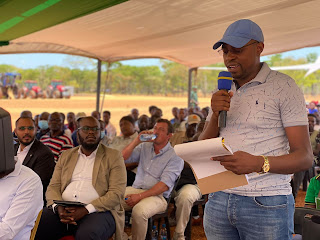
Mehluli Malisa, the lawyer for Kasanka Trust Limited


Mehluli Malisa, the lawyer for Kasanka Trust Limited was the first to speak and his concern was mainly why Lake Agro Industries disregarded several pieces of legislation and proceeded with the project without approval. 

“You say you have complied with all laws, why was the Kafinda GMA plan ignored in your EIA? It has the force of law. Section 29 of the Environmental Management Act of 2011 says no development can take place without authorisation from ZEMA. Why is your project in full swing?”said Mr Malisa of Muyatwa Legal Practitioners in Lusaka. 

He further questioned why Lake Agro industries ignored several stop orders from ZEMA and other government institutions which had ordered the company to move the project to the Nansanga Farming block which is a few kilometres away and has thousands of hectares of land reserved for commercial farming. 
 
In response, the Lead Consultant Mr Simfukwe issued an apology on behalf of the developer. 
 
“A wrong is a wrong and a right is a right and I believe in that. This was a wrong; they started before the EIA was approved. But there are channels that are responsible for that, those are channels we will wait to give us penalties if any.....,” he said. 
 
At this point, Lake Agro Industries Managing Director Abdulaziz Ahmed chipped in to defend the company’s decision to kick start the project early. 
 
“The late Chief, May His Soul Rest In Peace, insisted that the project continues because it will benefit the Nabowa and Mapepala communities. For this reason, we put our heads together and started the project. Today we are regularising everything and taking all concerns,” he said. 
 
Another stakeholder from Lavushimanda District in Muchinga Province asked whether the company had acquired water rights from the Water Resources Management Agency (WARMA). 
 
This question arose from the fact that Lake Agro is already using water from the Luombwa River to irrigate crops using center pivots. 
 
In response, the company claimed to have water rights. 
 
“Last year we got a temporal permit from WARMA for 6,000 cubic meters of water per day. We applied for more rights according to our plan. We received a demand notice and yes I can say we have water rights upto November,” said Mr Adapa. 
 
However, WARMA was represented at the hearing and gave a clear picture. Felix Kabombo, an Inspector at WARMA explained that Lake Agro Industries was only given a temporal permit for initial works and not for full scale irrigation. 
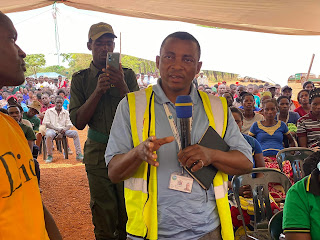
WARMA Inspector Felix Kabombo

 
“We only give a full five years permit after following all laws including clearance from ZEMA. At the moment, they (Lake Agro) only have a permit for developments they are doing, not irrigation,” said Mr Kabombo. 
 
Others questioned the actual EIA and its contents. 
 
For example, Kasanka Trust General Manager James Mwanza wondered why the developer opted to use hydraulic baseline data which is over 30 years old when latest reports are readily available. 
 
To him, the use of outdated statistics was tantamount to misleading ZEMA and the public over the plans for the project. 
 
For the World Wide Fund for Nature (WWF), an organisation which fights for the preservation of nature, their concerns were twofold: conditions of service for workers and mitigation measures proposed for the area. 
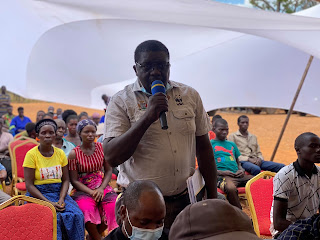
 
WWF Head of Species Moses Nyirenda
WWF Zambia Head of Species and Protected Areas Moses Nyirenda said investigations by his organisation have revealed that workers are being paid below the government-set minimum wage. 
 
“What type of employment is here? Is it cheap labour or sustainable jobs? The rates offered are below the minimum wage...... This is a pristine area but your restoration and mitigation measures are vague,” said Mr Nyirenda. 
 
In response, Ahmed said the company was providing sustainable employment and had already employed between 100 and 150 people. 
 
For those involved in protecting birds in the wild, a project of this magnitude is a big concern to them especially that the Kasanka area is an important bird area. 
 
“Are you aware that in addition to the bat migration which is being talked about, this area sits in one of the eight worldwide recognised bird migratory fly ways which is the East Atlantic Fly Ways?”asked Clara Nanja the Programme Manager at BirdWatch Zambia. 
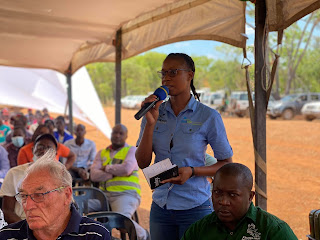
 
BirdWatch Zambia Programme Manager Clara Nanja
Ms Nanja’s other concern was on where Lake Agro industries is planning to conduct its re-aforestation efforts. She wanted to know whether it is the areas already cleared where center pivots are already installed and operating. 
 
For the Department of National Parks and wildlife which is responsible for the management of protected areas the country, it made a 360 degrees u-turn at the public hearing. 
 
This is the same institution which years ago gave Lake Agro Industries a go-ahead to set up the farm in the Kafinda Game Management Area. 
 
However, at the meeting, it was a different story. 
 
“The department is against large scale farming in the Game Manament Area. The location is in a sensitive area for the dispersal of bats in the Kasanka National Park. We recommend that this farming development is relocated to Nansanga Farming block where extensive farming is not in conflict with conservation,” said Sangulukani Phiri, who read a statement on behalf of the Department’s Director. 
 
Mr Phiri said once the developer relocates to Nansanga, it should restore the area it has already cleared and ensure it is environmentally friendly for flora and fauna. 
 
The Department however said if Lake Agro is allowed by ZEMA to operate in the GMA, it should be restricted to the 560 hectares it has already cleared to protect the environment. 
 
Community Concerns 
 
Among the many community members who spoke, their biggest issues were to do with access to water, sustainable jobs and importation of labour by Lake Agro Industries. Maggie Mwelwa, a resident of Mapepala complained that the investor had brought supervisors from Tanzanians who were mistreating local workers. 
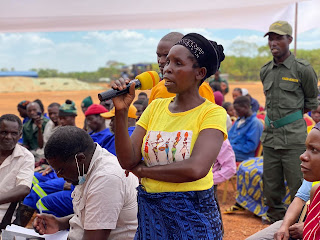
A resident of Nabowa speaking at the hearing

 
“There is a lot of segregation. They brought many people from Tanzania who are supervisors. Some workers come from the Copperbelt. We the locals are not benefiting. How are we going to educate our children,” she said. 
 
Her view was shared by many other locals who complained about the foreigners. 
 
“We appreciate this development, it has created jobs. However, they brought Tanzanians who are mistreating our people. I can even name those Tanzanians: Robert Tapo, Jimmy Tapo, Nchimunya Tapo and many others. Surprisingly, none of them has come to this meeting, why are they hiding?” said Harrison Mumba, a resident of Nabowa. 
 
Other residents complained of unfair dismissals by Lake Agro Industries. 
 
For example, Joseph Pengele, an old man, complained that he was fired two years ago and he has not been compensated. 
 
He further said workers get injured at work but they are not given enough compensation. 
 
Another resident who identified himself as Mukosha said in the three years the company had been operating, none of the local workers had signed contracts. 
 
“None of our people here have seen contracts. Maybe workers from Ndola have signed contracts. But for workers from Nabowa and Mapepala, their jobs are terminated anyhow due to lack of contracts,” said Mukosha. 
 
In response to these concerns by the community, Ahmed said he would send Human Resource Officers from Lake Agro Industries’ Ndola office to address concerns on mistreatment and intimidation. 
 
Conclusion 
 
In the end, the task now remains with the Zambia Environmental Management Agency to decide whether to issue clearance to the project or reject. 
 
ZEMA also has the powers to punish Lake Agro Industries for having gone ahead to clear and plant crops on a 560 hectares piece of land which is deep in a game management area and threatens the annual bat migration which attracts thousands of tourists per year. 
 
The outcry by non government organisations, government agencies and locals for this project are genuine because it has been hurried and threatens the very existence of the bats which are a marvel and an important part of the ecosystem in the Kasanka area. 
 
For now, all eyes and ears are focused on ZEMA; everyone wants to know what decision the environmental watchdog will make. 
 
“ZEMA has already made its professional verification of the project. Our Board will look at these issues and make a decision. All comments will be taken into account as we make a decision,” said ZEMA Acting Director General Simon Mwansa at the close of the public hearing.